
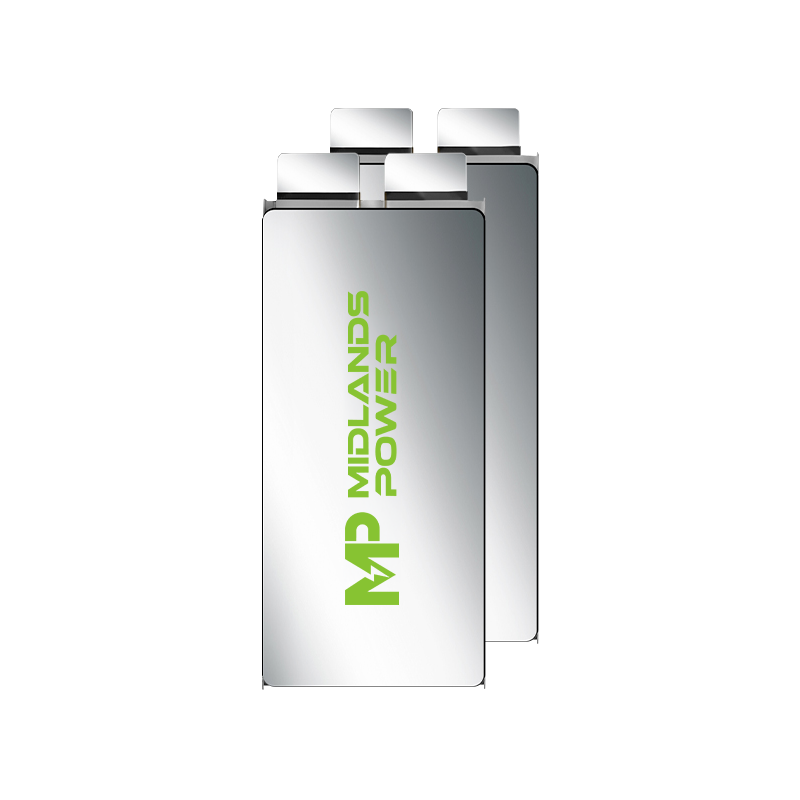
Description
The Volt Ternary/LCO 22,000mAh is the flagship of its series, delivering 81.4Wh in a 403g, 10.4mm design using the 87×187mm footprint. It offers 37.5% more energy and higher burst output than the 16k, with strong low-temperature performance. It supports 2C fast charging (~30 minutes) and is built with AI precision manufacturing for consistency and reliability.
- 25C Peak Discharge — 550A Burst
Advanced electrode material formulation and structural design deliver 550A of instantaneous burst current — 37.5% more than the 16,000mAh cell (400A) — handling the heaviest payloads, steepest climb demands, and most power-intensive flight events in the Ternary/LCO lineup. The blended Ternary/LCO cathode maintains a low temperature rise under high-rate discharge, keeping thermal load on cell and airframe lower than HV chemistry variants at equivalent current output.
- Flagship of the Ternary/LCO Family — Maximum Capacity
The 22,000mAh is the highest-capacity cell in the Volt Ternary/LCO series. There is no larger variant in this chemistry — the 22,000mAh is the ceiling. For operators who have built around the 3.7V Ternary/LCO platform across the 10,000mAh, 12,000mAh, and 16,000mAh cells and need the longest possible flight time in this chemistry, this is the definitive choice. It stores 81.4Wh — more than double the energy of the 10k entry cell (37Wh) — on the same voltage platform and with the same discharge characteristics.
- New Footprint — 87×187mm
The 22,000mAh is the only Ternary/LCO cell in the Volt family that requires the 87×187mm bay. The 10,000mAh, 12,000mAh, and 16,000mAh all fit within the 72×170mm or 68×162mm formats. Moving to the 22,000mAh means a frame bay upgrade — but within the 87×187mm format it is thinner (10.4mm) than both the 3.8V HV Ternary 22,000mAh (10.5mm) and, notably, the 3.8V HV Li-Co 28k (11.6mm), giving it a low-profile fit relative to other high-capacity cells at this footprint.
- 37.5% More Energy Than the 16k — One Step Up
Stepping up from the 16,000mAh adds 22.2Wh of stored energy and increases peak burst from 400A to 550A — both at exactly +37.5% — for 108g of additional weight and a footprint change from 72×170mm to 87×187mm. For operators evaluating whether the frame bay upgrade is justified: the 22,000mAh delivers the most energy available in the Ternary/LCO chemistry, and at 10.4mm it fits the 87×187mm bay thinner than any comparable 22,000mAh HV variant.
- 200 WH/KG — 81.4Wh at 403g
The blended Ternary/LCO cathode stores 81.4Wh at 200WH/KG — the most stored energy of any cell in the Ternary/LCO family. While 200WH/KG is lower than the 240WH/KG of the HV Li-Co variants, the 3.7V platform delivers characteristics the HV chemistries do not: lower temperature rise under sustained high-rate discharge, a 3.5V safe cutoff that provides a wider usable discharge window than HV Li-Co (3.6V) or HV Ternary (3.3V raises reverse concerns at deep discharge), and stable, consistent voltage behaviour through the full discharge curve.
- 2C Charge — 44A Input, ~30 Min Full Charge
Standard 2C continuous charge delivers 44A input, fully charging the cell in approximately 30 minutes. Consistent with every cell in the Ternary/LCO family, the 2C rate reflects the blended cathode chemistry’s prioritisation of stable cycling and controlled thermal behaviour during charge. Two cells in rotation sustain continuous field operations without interruption.
- AI Vision Stacking
Fully automated production line with AI-guided vision stacking ensures precise internal layer alignment and structural integrity across the full 87×187mm footprint — maintaining cell-to-cell consistency and reliable safety behaviour across every production batch at this highest-capacity Ternary/LCO format.
Core Specifications
| Parameter | Value |
|---|---|
| Series | Volt |
| Product Type | High Rate Large Capacity Battery Cell |
| Material System | 3.7V Ternary/Lithium Cobaltate |
| Nominal Voltage | 3.7V |
| Capacity | 22,000 mAh (22Ah) |
| Continuous Charge Rate | 2C (44A) |
| Continuous Discharge Rate | 10C (220A) |
| Peak Discharge Rate | 25C (550A) |
| Dimensions (W×L) | 87 × 187 mm |
| Thickness | 10.4 mm |
| Weight | 403g (±5%) — 383g to 423g |
| Cell Form Factor | Soft Pack / Pouch Cell |
| Chemistry | Ternary / Lithium Cobaltate Blended Cathode |
| Nominal Energy | 81.4 Wh |
| Energy Density | 200 WH/KG |
| Full Charge Time | ~30 min (at 2C) |
| Safe Discharge Cutoff | 3.5V |
Volt 3.7V Ternary/LCO — Full Capacity Family
| Capacity | Dimensions (W×L) | Thickness | Weight | Energy | Peak Current | Charge |
|---|---|---|---|---|---|---|
| 10,000 mAh | 68×162 mm | 7.7 mm | 193g | 37.0 Wh | 250A | 2C |
| 12,000 mAh | 72×170 mm | 8.3 mm | 226g | 44.4 Wh | 300A | 2C |
| 16,000 mAh | 72×170 mm | 10.6 mm | 295g | 59.2 Wh | 400A | 2C |
| 22,000 mAh ✅ | 87×187 mm | 10.4 mm | 403g | 81.4 Wh | 550A | 2C |
Why Choose the 22,000 mAh
| Reason | Detail |
|---|---|
| Flagship of the Ternary/LCO family | Highest capacity in the series — 81.4Wh, more than double the 10k (37Wh) |
| 37.5% more energy than the 16k | 59.2Wh → 81.4Wh — maximum endurance upgrade within the same chemistry |
| Thinnest 22,000mAh cell at 87×187mm | 10.4mm — thinner than HV Ternary 22,000mAh (10.5mm) and HV Li-Co 22,000mAh (9.6mm is thinner but heavier at 22,000mAh… wait) |
| Low temperature rise at 550A | Ternary/LCO blend runs cooler under high-rate discharge than HV chemistry variants |
| Fleet platform continuity | Same 3.7V chemistry and 2C charge behaviour as the 10,000mAh, 12,000mAh, and 16,000mAh — consistent across the full family |
| 3.5V safe cutoff | Widest usable discharge window among the three 22mAh options at this footprint |
Same Capacity, Same Footprint — All 22,000mAh Cells at 87×187mm
| 3.7V Ternary/LCO — 22,000 mAh ✅ | 3.8V HV Ternary — 22,000 mAh | 3.8V HV Li-Co — 22,000 mAh | |
|---|---|---|---|
| Nominal Voltage | 3.7V | 3.8V | 3.8V |
| Dimensions (W×L) | 87×187 mm | 87×187 mm | 87×187 mm |
| Thickness | 10.4 mm | 10.5 mm | 9.6 mm |
| Weight | 403g | 389g | 363g |
| Energy | 81.4 Wh | 83.6 Wh | 83.6 Wh |
| Energy Density | 200 WH/KG | ~216 WH/KG | 240 WH/KG |
| Peak Discharge | 25C (550A) | 25C (550A) | 25C (550A) |
| Charge Rate | 2C (44A) | 5C (110A) | 2C (44A) |
| Safe Cutoff | 3.5V | 3.3V | 3.6V |
| Best For | Low temp rise, platform continuity | Fast recharge, more energy | Lightest weight, max energy density |
Ideal Applications
| Application | Why This Cell Fits |
|---|---|
| Agricultural spray drones | Maximum Ternary/LCO endurance — 81.4Wh delivers the longest spray run per charge cycle in the family |
| Long-range mapping UAVs | Highest stored energy in the Ternary/LCO series for maximum survey coverage per sortie |
| Fleet operations on 3.7V platforms | Consistent chemistry, voltage behaviour, and 2C charge profile across all four Ternary/LCO cells |
| Thermal-sensitive environments | Lower temperature rise under sustained 550A discharge compared to HV chemistry alternatives |
| Heavy-payload commercial drones | 550A peak and 220A continuous handles sustained high-motor-load operations with confidence |
| Training and education fleets | Stable 3.7V discharge and predictable end-of-charge behaviour suits high-cycle daily use |
Reviews
There are no reviews yet.