
Description
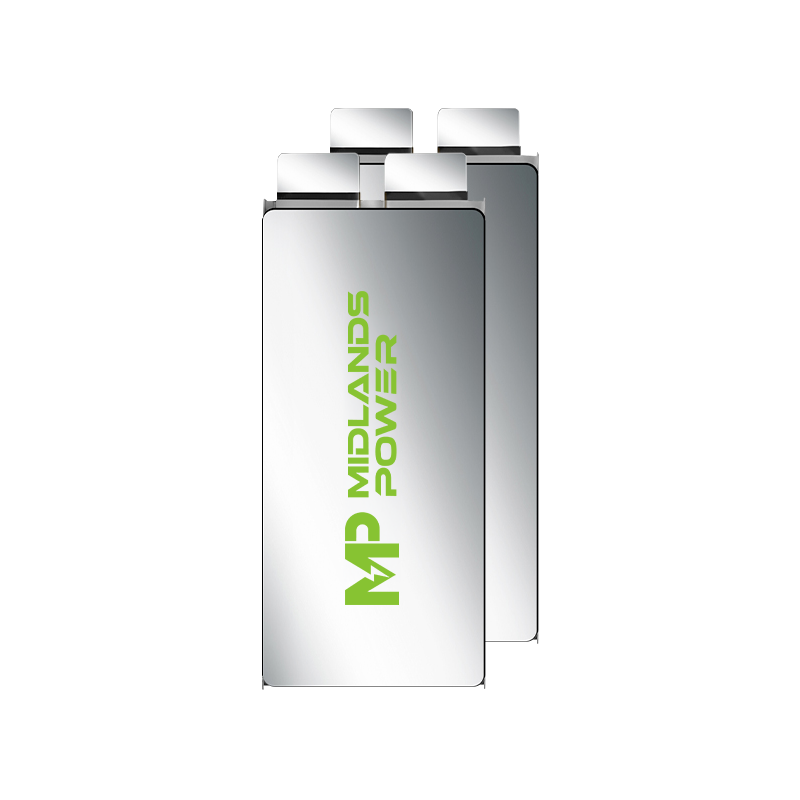
The lightest cell in the entire Midlands Power catalogue — and the entry to the 130C peak rate tier. The 3.7V Ternary 500mAh delivers 65A peak at 130C from a 17g, 4.8mm soft pack in the 30×48mm footprint — lighter than every Volt, Prime, Max, and Ultra cell in the lineup, and the thinnest cell in the 30×48mm family. Built for micro FPV racing drones, compact RC cars, RC aircraft, and RC boats, where the wide short 30×48mm geometry is the only bay that fits and an absolute minimum weight is the build requirement.
Key Specifications at a Glance
| Specification | Value |
|---|---|
| Nominal Voltage | 3.7V |
| Capacity | 500mAh (0.5Ah) |
| Stored Energy | 1.85Wh |
| Continuous Discharge | 60C / 30A |
| Peak Discharge | 130C / 65A |
| Charge Rate | 2C / 1.0A (~30 min) |
| Dimensions | 30 × 48mm |
| Thickness | 4.8mm |
| Weight | 17g (±5%) |
| Construction | Ceramic separator / PVDF electrode |
| Application | Racing-grade FPV / RC car / RC aircraft / RC boat |
Why Choose the Midlands Power 500mAh Ultra Ternary Battery?
17g — The Lightest Cell in the Entire Midlands Power Catalog
At 17g, the 500mAh is lighter than every cell across all four Midlands Power series — Volt, Prime, Max, and Ultra. The previous catalog minimum was the 20×96mm 800mAh at 19g. At 2g less, the 500mAh sets the absolute minimum weight point of the entire lineup. For micro FPV builds operating at the lower boundary of practical all-up weights — where 2g represents a meaningful proportion of the total battery system mass — this cell defines the floor. There is no lighter option in the catalog.
130C Peak — Higher C-Rating Than the Entire 20-Series Ultra Format Range
Every cell in the 20×96mm and 20×122mm formats peaks at 110C. The 30×48mm format, from this entry cell upward, peaks at 130C — 20C above the entire 20-series ceiling, on the same 3.7V Ternary chemistry. The wider, shorter 30×48mm geometry distributes electrode area across a broader planar surface, reducing localised thermal and electrochemical stress at peak discharge events and enabling the higher 130C peak rating. The result: the lightest cell in the catalog also carries a higher C-rating at peak than any 20-series Ultra cell regardless of capacity.
4.8mm — The Thinnest Cell in the 30×48mm Format
At 4.8mm, the 500mAh is the thinnest cell in the entire 30×48mm family — the only one under 5mm in this format:
| Cell | Thickness |
|---|---|
| 500mAh | 4.8mm |
| 850mAh | 7.6mm |
| 1,100mAh | 9.6mm |
For builds where the 30×48mm planar dimensions fit but bay depth is strictly constrained below 7mm, the 500mAh is the only option in this format. There is no alternative at this depth in the 30×48mm family.
Wide Short Format — 30×48mm for Bays Where 20-Series Lengths Are Impossible
The 30×48mm footprint serves platforms the 20-series cannot. At 30mm wide and 48mm long, it fits short, wide battery bays in micro FPV frames, compact RC cars, and racing platforms where a 96mm or 122mm cell length is structurally impossible. The wider format also provides greater planar contact area across the full 30mm width — beneficial for platforms that rely on the battery’s surface for structural mounting or weight distribution. For any build where the bay is short and wide rather than narrow and long, the 30×48mm format is the only geometry that works.
Entry to the 130C Rate Tier and the 30×48mm Format
The 500mAh opens both the 30×48mm format and the 130C rate tier of the Ultra lineup — the starting point for builders moving from the 110C 20-series into the wider compact geometry. At 4.8mm and 17g, it is the thinnest and lightest entry available in the 130C tier, establishing the minimum weight and depth baseline from which every other 30×48mm cell steps up.
Ceramic Separator and PVDF Electrode — Racing-Grade Construction at Micro Scale
Industry-first ceramic separator and PVDF electrode construction deliver thermal resistance and structural integrity at the extreme output levels of competitive racing, at the smallest and lightest end of the Ultra lineup. At 17g and 130C peak — where thermal management from the airframe is minimal — the ceramic separator’s thermal resistance and the PVDF binder’s structural integrity under high-rate cycling are particularly critical, ensuring safe and consistent performance across hundreds of charge-discharge cycles in micro racing environments.
Full 30×48mm Format Comparison
| 500mAh | 850mAh | 1,100mAh | |
|---|---|---|---|
| Thickness | 4.8mm | 7.6mm | 9.6mm |
| Weight | 17g | 26g | 33g |
| Energy | 1.85Wh | 3.15Wh | 4.07Wh |
| Peak | 130C / 65A | 130C / 110A | 130C / 143A |
| Continuous | 60C / 30A | 60C / 51A | 60C / 66A |
| Charge Rate | 2C / 1.0A | 2C / 1.7A | 2C / 2.2A |
| Best For | Minimum weight, depth ≤ 4.8mm | Mid-range, largest proportional step | Maximum 30×48mm energy and current |
30×48mm 500mAh vs. 20×96mm 800mAh — Wide Short vs. Narrow Short
| 30×48mm 500mAh | 20×96mm 800mAh | |
|---|---|---|
| Dimensions | 30×48mm | 20×96mm |
| Thickness | 4.8mm | 5.0mm |
| Weight | 17g | 19g |
| Energy | 1.85Wh | 2.96Wh |
| Peak C-Rating | 130C | 110C |
| Peak Current | 65A | 88A |
| Best For | Wide short bay, lightest cell, 130C tier | Narrow short bay, more energy, higher absolute current |
The choice between them is entirely a question of bay geometry. For narrow short bays, the 20×96mm 800mAh is the correct cell. For wide short bays where 96mm length is impossible, the 500mAh is the only option — and at 17g it is the lighter cell.
Stepping Up From the 500mAh — Which Cell Next?
Both steps up within the 30×48mm family from this position:
| Step | Weight Added | Thickness Added | Energy Gained | Peak Gained |
|---|---|---|---|---|
| 500mAh → 850mAh | +9g | +2.8mm | +70.3% | +45A |
| 500mAh → 1,100mAh | +16g | +4.8mm | +120.0% | +78A |
The 850mAh is the most energy-efficient next step — 70.3% more energy for just 9g more, the largest proportional gain of any step in the 30×48mm family. The 1,100mAh closes the format at its absolute performance ceiling. Both remain available in the same 30×48mm bay with no frame modification required.
Charging: 2C / 1.0A — Full Charge in ~30 Minutes
The 2C continuous charge rate delivers 1.0A input — the entry-level charge current of the Ultra lineup — fully charging the cell in approximately 30 minutes. Standard RC chargers and parallel charging boards handle 1.0A input without any special requirement. Running multiple cells in rotation sustains back-to-back micro racing sessions without interruption.
Ideal Applications
Micro FPV racing drones — 17g and 130C peak, the absolute minimum weight entry to the 30×48mm 130C rate tier for micro builds targeting the lowest possible all-up weight.
Compact RC cars with short wide bays — the 30×48mm format fits short wide battery compartments where 96mm or 122mm cell lengths do not clear.
RC aircraft with compact fuselage bays — 4.8mm thin and 17g for shallow compact bays in small-scale racing aircraft where depth is the binding constraint.
RC boats with short hull compartments — 130C / 65A peak in the lightest available 30×48mm cell for compact racing hull designs.
Gun models with wide short battery cavities — the 30×48mm footprint fits wide short battery positions in gun model platforms.
Weight-critical micro builds — at 17g, the lightest cell in the entire catalog, the starting point for any build targeting minimum battery system weight.
Product Summary
The Midlands Power 3.7V Ternary 500mAh opens the 30×48mm format and the 130C rate tier as the lightest cell in the entire Midlands Power catalog — 17g, 4.8mm, 1.85Wh — at a 130C peak rating that exceeds the 110C ceiling of the entire 20-series. For micro racing builds in the 30×48mm geometry where minimum weight and depth below 7mm are the fixed constraints, this is the only option in the format and the absolute starting point for the 130C wide compact architecture.
Series: Ultra | Chemistry: 3.7V Ternary | Construction: Ceramic separator / PVDF electrode | Form Factor: Soft Pack / Pouch Cell
Reviews
There are no reviews yet.