
Description
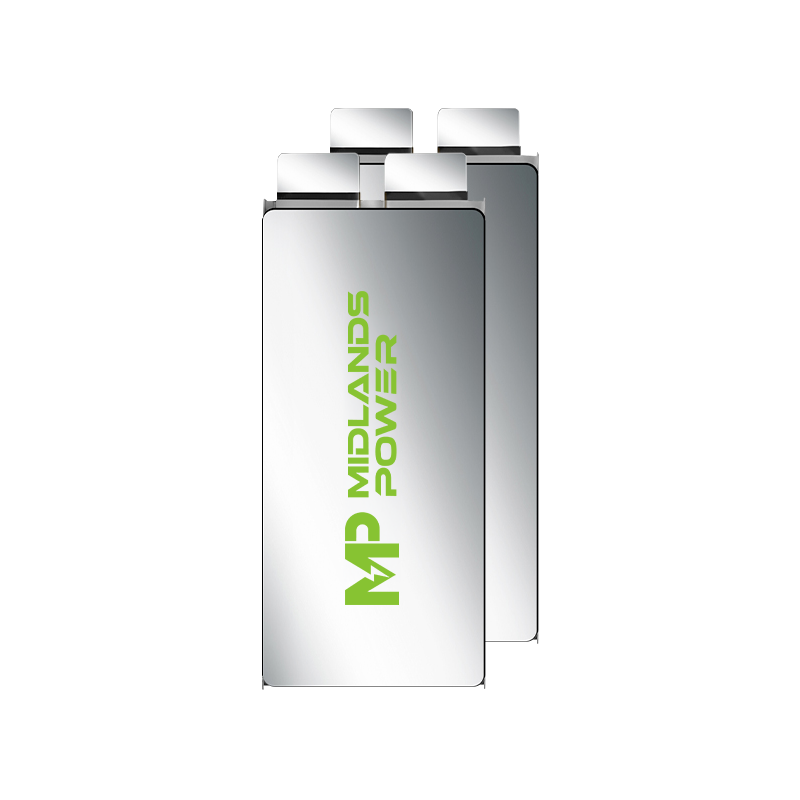
The entry point to the 43×128mm format — thinnest, lightest, and 33% more energy than the 34×96mm cell it replaces. The 3.7V Ternary 4,000mAh delivers 300A peak and 180A continuous from a 90g, 7.2mm soft pack in the 43×128mm footprint — the thinnest cell in the 43×128mm family and the only option in this format under 9.2mm depth. Built for full-size FPV racing drones, RC cars, RC aircraft, and RC boats, stepping up from the 34-series into the larger 75C rate architecture.
Key Specifications at a Glance
| Specification | Value |
|---|---|
| Nominal Voltage | 3.7V |
| Capacity | 4,000mAh (4.0Ah) |
| Stored Energy | 14.80Wh |
| Continuous Discharge | 45C / 180A |
| Peak Discharge | 75C / 300A |
| Charge Rate | 2C / 8.0A (~30 min) |
| Dimensions | 43 × 128mm |
| Thickness | 7.2mm |
| Weight | 90g (±5%) |
| Construction | Ceramic separator / PVDF electrode |
| Application | Racing-grade FPV / RC car / RC aircraft / RC boat |
Why Choose the Midlands Power 4,000mAh Ultra Ternary Battery?
33.3% More Energy Than the 34×96mm 3,000mAh — 3.5mm Thinner
The step from the 34×96mm 3,000mAh to the 43×128mm 4,000mAh is the largest absolute Wh gain of any format transition in the Ultra lineup — and it comes with a thinner profile despite the larger footprint:
| 43×128mm 4,000mAh | 34×96mm 3,000mAh | |
|---|---|---|
| Thickness | 7.2mm | 10.7mm |
| Weight | 90g | 75g |
| Energy | 14.80Wh | 11.10Wh |
| Peak Current | 300A | 390A |
| Continuous | 180A | 180A |
| Charge Rate | 2C / 8.0A | 2C / 6.0A |
3.70Wh more energy (+33.3%), 3.5mm thinner, the same 180A continuous output — for 15g of additional weight and a larger footprint. For builders who have maximized the 34×96mm format with the 3,000mAh, this is the natural next step.
7.2mm — The Thinnest Cell in the 43×128mm Format
At 7.2mm, the 4,000mAh is the thinnest cell in the entire 43×128mm family — 2.0mm thinner than the 5,200mAh (9.2mm) and 3.7mm thinner than the 6,300mAh (10.9mm). For builds where the 43×128mm planar dimensions fit but bay depth is constrained below 9.2mm, the 4,000mAh is the only option in this format. The larger 43×128mm planar area distributes electrode layers across a greater surface, enabling 14.80Wh of stored energy at a profile that is simultaneously thinner than the 34×96mm 3,000mAh it replaces.
300A Peak — Entry to the 43×128mm Rate Architecture
Advanced electrode material formulation and the 43×128mm wide extended-format geometry deliver 300A of instantaneous peak burst current at 75C. The 75C architecture is deliberate: at 4,000mAh, 75C produces 300A absolute peak — appropriate for the motor and ESC configurations of full-size FPV builds and larger RC racing platforms, with greater thermal headroom per unit of capacity than a higher-C-rated cell producing equivalent absolute current at lower capacity.
180A Continuous — Same Absolute Output as the 34×96mm 3,000mAh, 33% More Energy
At 45C continuous, the 4,000mAh delivers 180A of sustained output — identical to the 34×96mm 3,000mAh’s 60C × 3.0Ah = 180A, achieved here through a lower C-rating at higher capacity in a larger format. For full-size FPV and racing platforms where 180A sustained is the operating requirement, the 4,000mAh delivers it while storing 14.80Wh — a third more energy than the 3,000mAh — in a cell that is 3.5mm thinner.
14.80Wh — Highest Stored Energy in the Ultra Lineup at This Tier
At 14.80Wh, the 4,000mAh stores more energy than any Ultra cell up to and including this capacity tier — 3.70Wh more than the 34×96mm 3,000mAh (11.10Wh) and more than every smaller-format Ultra cell. For FPV and racing platforms where longer run time within the 43×128mm bay is the objective, 14.80Wh is the largest energy reserve available at the entry point of this format.
Why 75C at 43×128mm — Understanding the Rate Architecture Shift
Every Ultra cell from the compact micro formats through to the 34×96mm 3,000mAh operated at 130C peak and 60C continuous. The 43×128mm format operates at 75C peak and 45C continuous — not a performance reduction, but a performance reorientation. At higher capacities and in larger footprints, electrode area per unit of capacity increases, producing the same absolute current at a lower C-rating with reduced electrochemical stress per unit of electrode area. The result: 300A peak and 180A continuous from a 7.2mm, 90g cell — absolute current levels appropriate for full-size FPV builds and larger RC racing platforms, delivered with greater thermal stability across the larger 43×128mm planar area.
Ceramic Separator and PVDF Electrode — Racing-Grade Construction
Industry-first ceramic separator and PVDF electrode construction deliver thermal resistance and structural integrity at the demanding output levels of full-size competitive racing. The ceramic separator maintains safety under 300A peak events across the 43×128mm electrode area. The PVDF binder sustains electrode structural integrity under the combined stress of 180A continuous discharge and 300A peak events through the full 128mm electrode length, contributing to long cycle life and consistent performance across hundreds of high-rate charge-discharge cycles.
Full 43×128mm Format Comparison
| 4,000mAh | 5,200mAh | 6,300mAh | |
|---|---|---|---|
| Thickness | 7.2mm | 9.2mm | 10.9mm |
| Weight | 90g | 116g | 137g |
| Energy | 14.80Wh | 19.24Wh | 23.31Wh |
| Peak | 75C / 300A | 75C / 390A | 75C / 472A |
| Continuous | 45C / 180A | 45C / 234A | 45C / 284A |
| Charge Rate | 2C / 8.0A | 2C / 10.4A | 2C / 12.6A |
| Best For | Thinnest entry, depth ≤ 7.2mm | Mid-range energy and current | Maximum 43×128mm energy and current |
Format Transition: When to Step Up From the 34×96mm 3,000mAh
The 4,000mAh is the natural upgrade from the 34×96mm 3,000mAh when two conditions are met: the platform has a 43×128mm bay available, and more stored energy or a thinner profile is the priority over a higher C-rating. The trade is straightforward — 33.3% more energy and 3.5mm less thickness for 15g more weight and a wider, longer footprint. For larger racing platforms where the 43×128mm format fits and battery weight has a proportionally smaller effect on handling than in micro builds, this is a highly favourable exchange.
Charging: 2C / 8.0A — Full Charge in ~30 Minutes
The 2C continuous charge rate delivers 8.0A input, fully charging the cell in approximately 30 minutes. Running multiple cells in rotation at 2C sustains back-to-back racing sessions at the entry energy level of the 43×128mm format without interruption.
Ideal Applications
Full-size FPV racing drones — entry to the 43×128mm 75C format, 14.80Wh and 300A peak at 7.2mm for full-size racing frame bays.
RC cars with full-size battery trays — 75C / 300A peak and 180A continuous in the 43×128mm format for high-current full-size motor setups.
RC aircraft with larger fuselage compartments — 14.80Wh at 90g in the 43×128mm bay, more energy and a thinner profile than the 34×96mm 3,000mAh for larger competitive aircraft.
RC boats with larger hull battery compartments — 45C / 180A continuous handles the highest sustained motor loads at the entry level of the 43×128mm format.
34×96mm 3,000mAh upgrade builds — new 43×128mm bay, 33.3% more energy, 3.5mm thinner, the same 180A continuous output, for 15g more weight.
Depth-constrained 43×128mm builds — at 7.2mm, the only 43×128mm cell under 9.2mm for the tightest-depth bays in this larger format.
Product Summary
The Midlands Power 3.7V Ternary 4,000mAh opens the 43×128mm format as its thinnest, lightest entry — 7.2mm, 90g, 14.80Wh — with 33.3% more stored energy and a 3.5mm thinner profile than the 34×96mm 3,000mAh it steps up from, at the same 180A continuous output. For full-size racing builds entering the 43×128mm bay, particularly those with depth constraints under 9.2mm, this is the only option in the format and the starting point for the entire 75C rate architecture.
Series: Ultra | Chemistry: 3.7V Ternary | Construction: Ceramic separator / PVDF electrode | Form Factor: Soft Pack / Pouch Cell
Reviews
There are no reviews yet.