
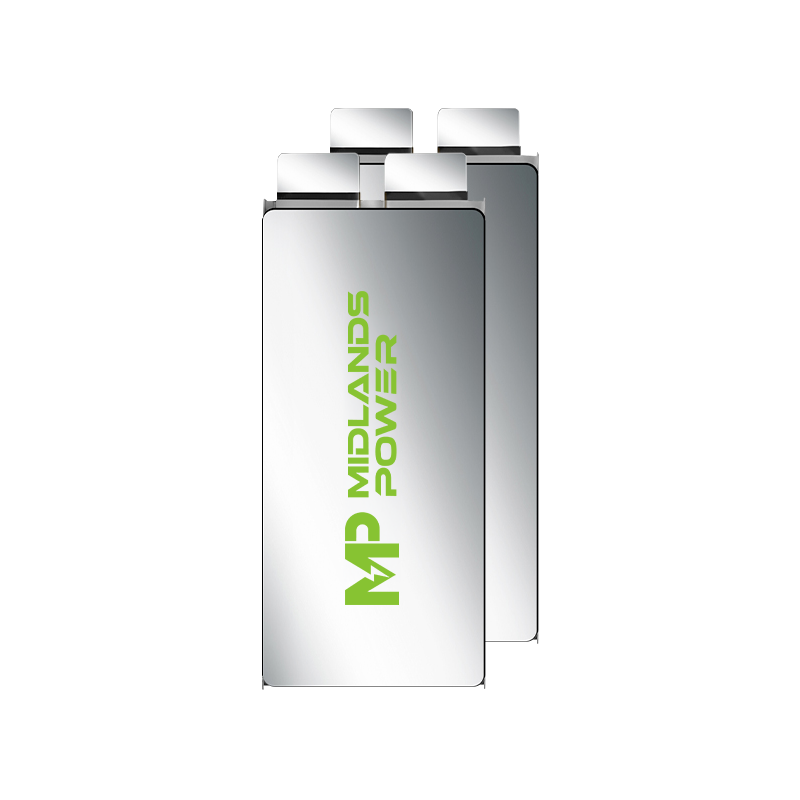
Description
- 350WH/KG — The Highest Energy Density in the Entire Lineup
The 350WH/KG platform is the highest gravimetric energy density of any cell across all four series — Volt, Prime, Max 320WH/KG, and Max 350WH/KG. It is 9.4% above the Max 320WH/KG platform, 25.0% above the Prime HN Ternary 280WH/KG platform, 45.8% above the Volt HV Li-Co 240WH/KG platform, and 75.0% above the Volt Ternary/LCO 200WH/KG baseline. The manufacturer describes it as achieving the highest energy density of any cell in the semi-solid product range, enabled by new high-specific-capacitance electrode materials and advanced packaging technology that go beyond what the 320WH/KG formulation delivers.
- Same Energy as the 320WH/KG 35,000mAh — 25g Lighter, 1.2mm Thinner
The Max 320WH/KG 35,000mAh stores 129.5Wh in 410g at 11.0mm. The Max 350WH/KG 35,000mAh stores 129.5Wh in 385g at 9.8mm — identical stored energy, 25g lighter, 1.2mm thinner, in the same 87×187mm bay. This is the most direct expression of what 350WH/KG delivers over 320WH/KG at the same capacity: not more energy, but the same energy in a physically smaller, lighter cell. For any platform where the 129.5Wh energy level is the target and weight or thickness reduction in the 87×187mm bay is the remaining constraint, the 350WH/KG 35,000mAh is the correct choice over the 320WH/KG 35,000mAh.
- More Energy Than the Max 320WH/KG 32,000mAh — 5g Heavier, 0.8mm Thinner
The Max 320WH/KG 32,000mAh stores 118.4Wh in 380g at 10.6mm. The Max 350WH/KG 35,000mAh stores 129.5Wh in 385g at 9.8mm — 9.4% more energy for 5g more weight and 0.8mm less thickness. The 350WH/KG 35,000mAh is simultaneously higher energy and physically thinner than the 320WH/KG cell directly below it in capacity — a consequence of the higher energy density distributing 35,000mAh of cell material more efficiently across the 87×187mm planar area. For operators evaluating both Max 320WH/KG and 350WH/KG cells, this comparison defines the entry point to the 350WH/KG tier: near-identical weight to the 320WH/KG 32,000mAh, thinner, and 9.4% more energy.
- 9.8mm — The Thinnest High-Energy Cell in the 87×187mm Footprint
At 9.8mm, the Max 350WH/KG 35,000mAh is the thinnest cell in the 87×187mm footprint that stores 129.5Wh. The Max 320WH/KG 35,000mAh stores the same energy at 11.0mm — 1.2mm thicker. The Prime HN Ternary 30,000mAh, storing 111.0Wh, is 10.8mm. The Prime SHV LCO 28,000mAh, storing 110.6Wh, is 11.3mm. At 9.8mm, the 350WH/KG 35,000mAh matches the thickness of the Prime HN Ternary 27,000mAh — a cell storing only 99.9Wh — while storing 29.6% more energy at only 20g more weight. For drone platforms with an 87×187mm bay where depth constraint is the binding physical limitation alongside maximum energy requirement, this is the definitive cell.
- 16.7% More Energy Than the Prime HN Ternary 30,000mAh — 21g Lighter, 1.0mm Thinner
The Prime HN Ternary 30,000mAh stores 111.0Wh in 406g at 10.8mm — the highest-energy 280WH/KG cell in the 87×187mm footprint. The Max 350WH/KG 35,000mAh stores 129.5Wh in 385g at 9.8mm — 16.7% more energy, 21g lighter, and 1.0mm thinner. All three metrics move in the same direction simultaneously. The 350WH/KG platform’s advantage over 280WH/KG at this footprint is not incremental — it is a categorical step that improves energy, weight, and thickness together.
- The 350WH/KG Technology — New High Specific Capacitance Electrode Materials
The Max 350WH/KG series achieves its energy density through new high specific capacitance electrode materials and advanced packaging technology — described by the manufacturer as the highest energy density achievable in the semi-solid cell category. This goes beyond the electrode formulation of the 320WH/KG platform, delivering greater energy storage per unit weight through a more advanced cathode material system. The semi-solid electrolyte construction reduces liquid electrolyte content versus conventional LiPo construction, providing lower risk of liquid leakage and fire, greater mechanical stability under vibration and impact loads, and more consistent internal geometry across the cell’s operational life. Rate balance optimisation — precisely designed material ratios balancing energy density and rate performance — ensures the 3C / 5C discharge profile remains practically useful for commercial drone applications despite the step up in energy density.
- 5C Peak — 175A, 3C Continuous — 105A
The Max 350WH/KG 35,000mAh delivers 175A peak burst and 105A continuous — identical to the Max 320WH/KG 35,000mAh at the same capacity. The rate profile is consistent across both 35,000mAh Max cells and across the entire Max series: 1C charge, 3C continuous, 5C peak. For mapping, logistics, emergency response, and fire-fighting UAVs where motor loads during cruise and standard operations fall within the 3C/105A continuous range and peak events do not exceed 5C/175A, this profile is appropriate for the endurance-first mission architecture both Max series cells are designed to serve.
- 1C Charge — 35A Input, ~60 Min Full Charge
Standard 1C continuous charge delivers 35A input, fully charging the cell in approximately 60 minutes — identical charge behaviour to the Max 320WH/KG 35,000mAh. Consistent with every cell in the Max series across both 320WH/KG and 350WH/KG tiers. Three cells in rotation at 1C sustain continuous field operations at the maximum endurance level this platform delivers.
- High-Precision Manufacturing — Electrode Preparation, Stacking, and Encapsulation
Automated, high-precision electrode preparation combined with advanced stacking and encapsulation technique ensures consistent internal structure and reduces performance fluctuations across every production batch. At the 350WH/KG energy density level — the highest in the lineup — manufacturing precision in electrode preparation and internal layer alignment is the direct determinant of both peak energy density realisation and the long-term safety behaviour of the cell across its operational service life.
Core Specifications
| Parameter | Value |
|---|---|
| Series | Max |
| Product Type | High Density Semi-Solid Battery Cell |
| Material System | 3.7V High Nickel Ternary — 350WH/KG |
| Nominal Voltage | 3.7V |
| Capacity | 35,000 mAh (35Ah) |
| Continuous Charge Rate | 1C (35A) |
| Continuous Discharge Rate | 3C (105A) |
| Peak Discharge Rate | 5C (175A) |
| Dimensions (W×L) | 87 × 187 mm |
| Thickness | 9.8 mm |
| Weight | 385g (±5%) — 366g to 404g |
| Cell Form Factor | Soft Pack / Pouch Cell |
| Cell Technology | Semi-Solid — New High Specific Capacitance Electrode |
| Chemistry | High Nickel Ternary |
| Nominal Energy | 129.5 Wh |
| Energy Density | 350 WH/KG |
| Full Charge Time | ~60 min (at 1C) |
Max 3.7V High Nickel Ternary 350WH/KG — Full Capacity Family
| Capacity | Dimensions (W×L) | Thickness | Weight | Energy | Cont. Discharge | Peak | Charge |
|---|---|---|---|---|---|---|---|
| 35,000 mAh ✅ | 87×187 mm | 9.8 mm | 385g | 129.5 Wh | 3C / 105A | 5C / 175A | 1C |
| 40,000 mAh | 87×187 mm | 10.8 mm | 430g | 148.0 Wh | 3C / 120A | 5C / 200A | 1C |
Why Choose the 350WH/KG 35,000 mAh
| Reason | Detail |
|---|---|
| Highest energy density in the entire lineup | 350WH/KG — the peak of the entire Volt, Prime, and Max series |
| Same energy as 320WH/KG 35,000mAh — 25g lighter, 1.2mm thinner | 129.5Wh in 385g at 9.8mm vs 129.5Wh in 410g at 11.0mm — same energy, less weight, thinner |
| More energy than Max 320WH/KG 32,000mAh — 5g heavier, 0.8mm thinner | 129.5Wh vs 118.4Wh — higher energy, thinner, near-identical weight |
| 16.7% more energy than Prime HN Ternary 30,000mAh — 21g lighter, 1.0mm thinner | All three metrics simultaneously in favour |
| Thinnest 129.5Wh cell in the 87×187mm format | 9.8mm — 1.2mm thinner than the only other cell storing this energy in this footprint |
| Entry to the 350WH/KG platform | Lowest weight and thinnest profile in the Max 350WH/KG family |
Same Footprint — All 87×187mm Cells Compared
| Max 350 35,000mAh ✅ | Max 320 35,000mAh | Max 350 40,000mAh | Max 320 32,000mAh | Prime HN Ternary 30,000mAh | Prime SHV LCO 28,000mAh | |
|---|---|---|---|---|---|---|
| Energy Density | 350 WH/KG | 320 WH/KG | 350 WH/KG | 320 WH/KG | 280 WH/KG | 280 WH/KG |
| Capacity | 35,000 mAh | 35,000 mAh | 40,000 mAh | 32,000 mAh | 30,000 mAh | 28,000 mAh |
| Thickness | 9.8 mm | 11.0 mm | 10.8 mm | 10.6 mm | 10.8 mm | 11.3 mm |
| Weight | 385g | 410g | 430g | 380g | 406g | 410g |
| Energy | 129.5 Wh | 129.5 Wh | 148.0 Wh | 118.4 Wh | 111.0 Wh | 110.6 Wh |
| Cont. Discharge | 3C / 105A | 3C / 105A | 3C / 120A | 3C / 96A | 5C / 150A | 5C / 140A |
| Peak Discharge | 5C / 175A | 5C / 175A | 5C / 200A | 5C / 160A | 10C / 300A | 10C / 280A |
| Charge Rate | 1C / 35A | 1C / 35A | 1C / 40A | 1C / 32A | 1C / 30A | 2C / 56A |
| Charge Time | ~60 min | ~60 min | ~60 min | ~60 min | ~60 min | ~30 min |
| Cell Technology | Semi-Solid | Semi-Solid | Semi-Solid | Semi-Solid | Semi-Solid | Semi-Solid |
| Best For | Highest density, lightest 129.5Wh | Same energy, 320WH/KG platform | Maximum 350WH/KG endurance | Entry to Max 87×187mm, 320WH/KG | Higher rate, 280WH/KG | 2C charge, 3.95V platform |
Ideal Applications
| Application | Why This Cell Fits |
|---|---|
| Maximum endurance mapping & survey drones | 350WH/KG — the highest available energy density for the longest endurance per gram in the 87×187mm format |
| Weight-critical long-range logistics UAVs | 129.5Wh at 385g — the lightest cell storing this energy level in the 87×187mm footprint by 25g |
| Thin-bay 87×187mm platforms | 9.8mm — the thinnest cell in this footprint at the 129.5Wh energy tier, fitting bays the 320WH/KG 35,000mAh cannot |
| Max 320WH/KG 35,000mAh replacement | Same 87×187mm bay, same energy — 25g lighter and 1.2mm thinner |
| Emergency response and fire-fighting UAVs | Semi-solid construction at the highest available energy density for the longest possible on-station operations |
| Max 350WH/KG fleet entry point | Lowest weight and thinnest profile in the 350WH/KG family — entry to the highest density tier in the lineup |
Reviews
There are no reviews yet.