
Description
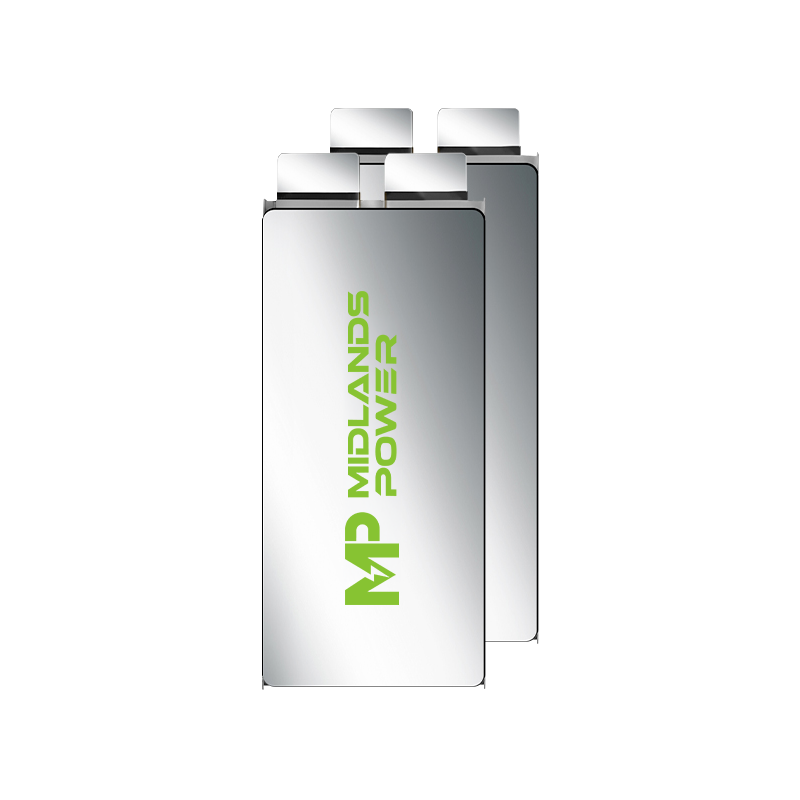
The Volt Ternary/LCO 16,000mAh is the highest-capacity 72×170mm cell, delivering 59.2Wh in the same footprint as lower models. It provides 33% more energy and power than the 12k, with stable low-temperature performance, 2C charging (~30 minutes), and AI precision manufacturing for consistent reliability.
- 25C Peak Discharge — 400A Burst
Advanced electrode material formulation and structural design deliver 400A of instantaneous burst current — 33% more than the 12,000mAh cell (300A) — providing confident handling of heavier payloads, steeper climb angles, and more demanding flight profiles within the same 72×170mm frame bay. The Ternary/LCO blended cathode maintains a low temperature rise under high-rate discharge, limiting thermal buildup during the peak demand events that stress cells hardest.
- Maximum Ternary/LCO Capacity in the 72×170mm Footprint
The 16,000mAh is the highest capacity achievable in the Volt Ternary/LCO family within the 72×170mm format. Stepping up to the next capacity in the family — the 22,000mAh — requires moving to an 87×187mm footprint, a different frame bay entirely. For operators committed to the 72×170mm form factor who need the most energy the Ternary/LCO chemistry can deliver in that size, the 16,000mAh is the only option.
- 33% More Energy Than the 12k — Same Frame Bay
Upgrading from the 12,000mAh to the 16,000mAh adds 14.8Wh of stored energy (+33%) and increases peak burst from 300A to 400A (+33%) without changing the footprint. The only cost is 69g of additional weight and 2.3mm of additional thickness (8.3mm to 10.6mm). For any drone already running the 12k where longer flight time is the primary objective, this is a direct, no-modification upgrade path.
- 200 WH/KG — 59.2Wh at 295g
The blended Ternary/LCO cathode stores 59.2Wh at 200WH/KG — the most energy of any Ternary/LCO cell in the 72×170mm footprint. The 200WH/KG figure reflects the 3.7V platform’s chemistry trade-offs versus the 3.8V HV variants: lower temperature rise under discharge, a wider usable discharge window down to 3.5V, and stable voltage behaviour throughout the full discharge curve — characteristics that matter in high-cycle training and agricultural operations.
- 2C Charge — 32A Input, ~30 Min Full Charge
Standard 2C continuous charge delivers 32A input, fully charging the cell in approximately 30 minutes. Consistent with all Ternary/LCO Volt cells, the 2C rate reflects the blended cathode chemistry’s prioritisation of stable cycling and low thermal stress during charge over maximum charging speed. Two cells in rotation cover continuous field operations without downtime.
- AI Vision Stacking
Fully automated production line with AI-guided vision stacking ensures precise internal layer alignment and structural integrity throughout the 72×170mm footprint — maintaining consistent performance, cell-to-cell uniformity, and reliable safety behaviour across every production batch.
Core Specifications
| Parameter | Value |
|---|---|
| Series | Volt |
| Product Type | High Rate Large Capacity Battery Cell |
| Material System | 3.7V Ternary/Lithium Cobaltate |
| Nominal Voltage | 3.7V |
| Capacity | 16,000 mAh (16Ah) |
| Continuous Charge Rate | 2C (32A) |
| Continuous Discharge Rate | 10C (160A) |
| Peak Discharge Rate | 25C (400A) |
| Dimensions (W×L) | 72 × 170 mm |
| Thickness | 10.6 mm |
| Weight | 295g (±5%) — 280g to 310g |
| Cell Form Factor | Soft Pack / Pouch Cell |
| Chemistry | Ternary / Lithium Cobaltate Blended Cathode |
| Nominal Energy | 59.2 Wh |
| Energy Density | 200 WH/KG |
| Full Charge Time | ~30 min (at 2C) |
| Safe Discharge Cutoff | 3.5V |
Volt 3.7V Ternary/LCO — Full Capacity Family
| Capacity | Dimensions (W×L) | Thickness | Weight | Energy | Peak Current | Charge |
|---|---|---|---|---|---|---|
| 10,000 mAh | 68×162 mm | 7.7 mm | 193g | 37.0 Wh | 250A | 2C |
| 12,000 mAh | 72×170 mm | 8.3 mm | 226g | 44.4 Wh | 300A | 2C |
| 16,000 mAh ✅ | 72×170 mm | 10.6 mm | 295g | 59.2 Wh | 400A | 2C |
| 22,000 mAh | 87×187 mm | 10.4 mm | 403g | 81.4 Wh | 550A | 2C |
Why Choose the 16,000 mAh
| Reason | Detail |
|---|---|
| Maximum Ternary/LCO energy in 72×170mm | Highest capacity this footprint delivers in this chemistry — the 22k requires an 87×187mm bay |
| Direct upgrade from 12k | Same 72×170mm footprint — 33% more energy, 33% more peak current, no frame modification |
| 59.2Wh at 3.7V platform | Only cell in this footprint delivering 59+ Wh on the 3.7V Ternary/LCO chemistry |
| Low temperature rise | Ternary/LCO blend runs cooler under high-rate discharge than HV chemistry variants |
| 3.5V safe cutoff | Wider usable discharge window than HV Li-Co (3.6V) — stable voltage behaviour to end of discharge |
Same Footprint, All Volt Chemistries — 72×170mm Full Comparison
| 3.7V Ternary/LCO 12,000 mAh | 3.7V Ternary/LCO 16,000 mAh ✅ | 3.8V HV Ternary 16,000 mAh | 3.8V HV Li-Co 17,000 mAh | |
|---|---|---|---|---|
| Capacity | 12,000 mAh | 16,000 mAh | 16,000 mAh | 17,000 mAh |
| Thickness | 8.3 mm | 10.6 mm | 10.9 mm | 10.0 mm |
| Weight | 226g | 295g | 281g | 284g |
| Energy | 44.4 Wh | 59.2 Wh | 60.8 Wh | 64.6 Wh |
| Energy Density | 200 WH/KG | 200 WH/KG | ~216 WH/KG | 240 WH/KG |
| Peak Discharge | 25C (300A) | 25C (400A) | 25C (400A) | 25C (425A) |
| Charge Rate | 2C (24A) | 2C (32A) | 5C (80A) | 2C (34A) |
| Safe Cutoff | 3.5V | 3.5V | 3.3V | 3.6V |
| Best For | Lightest & thinnest | Max Ternary/LCO energy | Fast recharge | Maximum energy density |
Ideal Applications
| Application | Why This Cell Fits |
|---|---|
| Agricultural spray drones | Maximum Ternary/LCO endurance in the 72×170mm bay — longer spray runs per charge cycle |
| Training drone fleets | Direct upgrade from 12k with no frame modification — 33% more flight time per charge |
| Compact mapping UAVs | 59.2Wh extends survey coverage per sortie in weight-managed 72×170mm platforms |
| Education platforms | Stable 3.7V discharge and low thermal profile suit high-cycle daily training environments |
| Mid-size inspection UAVs | 400A peak handles payload and sensor loads confidently in the 72×170mm frame class |
| Fixed-wing hybrid UAVs | 72×170mm footprint and stable voltage curve suit sustained fixed-wing cruise power profiles |
Reviews
There are no reviews yet.