Description
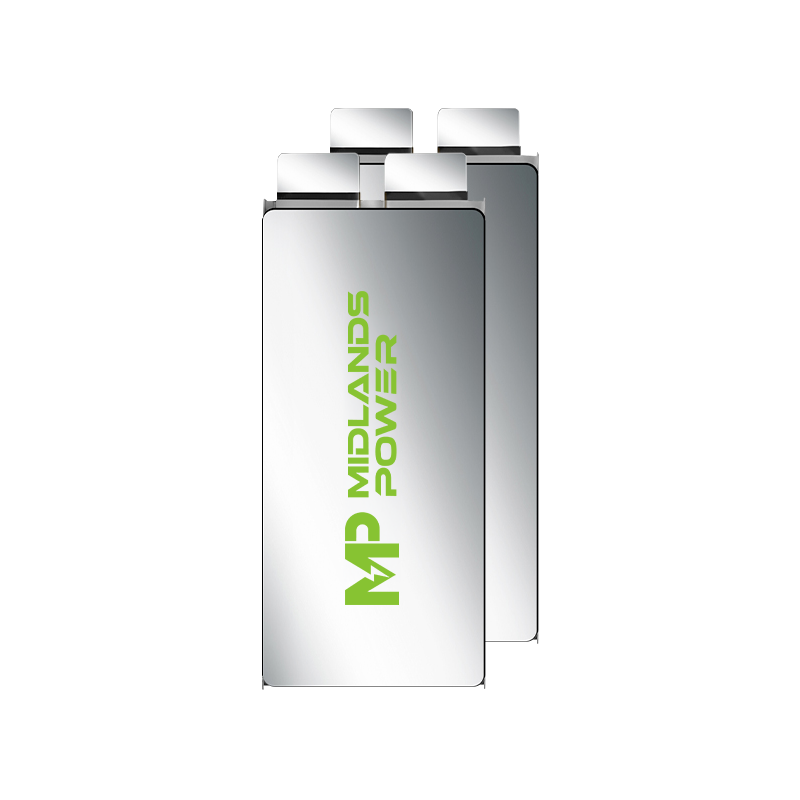
The Volt Ternary/LCO 10,000mAh is the smallest and lightest cell in the Volt lineup, using a unique 68×162mm footprint at just 193g. It delivers 25C peak (250A), 10C continuous (100A), and 2C fast charging. Built on Ternary/LCO chemistry with 200Wh/kg energy density, it’s designed for ultra-light UAVs where size and weight are critical, with AI-based precision manufacturing for consistency and reliability.
- 25C Peak Discharge — 250A Burst
Advanced electrode material formulation and structural design deliver 250A of instantaneous burst current — sufficient for takeoff, payload lifts, and rapid climb events on compact drone platforms — while the Ternary/LCO blended cathode maintains a low temperature rise under high-rate discharge, reducing thermal stress on both the cell and the airframe.
- The Only 68×162mm Cell in the Volt Lineup
No other Volt cell uses the 68×162mm footprint. This is not a smaller version of a larger cell — it is a purpose-built format for drone frames that cannot accommodate the 72×170mm or 87×187mm cells used by the rest of the Volt family. For compact education drones, training platforms, and lightweight agri-UAVs with tight battery bay constraints, this is the only Volt cell that physically fits.
- 193g — Lightest Cell in the Entire Volt Range
At 193g, this is the lightest cell across all four Volt material systems. The next lightest Volt cell is the 12,000mAh variant of this same family at 226g — already 17% heavier. The lightest 3.8V HV cell (17,000mAh Li-Co) weighs 284g — 47% more than this cell. For platforms with strict all-up weight budgets, the 10,000mAh is the only Volt cell that delivers high-rate performance at sub-200g.
The blended Ternary/Lithium Cobaltate cathode delivers 200WH/KG energy density — storing 37Wh of nominal energy in a cell weighing just 193g. While lower than the 240WH/KG of the high-voltage Li-Co variants, this is a direct result of the 3.7V voltage platform and blended cathode chemistry — a deliberate trade-off that also delivers lower temperature rise and a longer safe discharge window compared to pure LCO cells.
- 2C Charge Rate — 20A Input
Standard 2C continuous charge delivers 20A input, fully charging the cell in approximately 30 minutes. The 2C charge rate is consistent across all Ternary/LCO Volt cells — a characteristic of the blended cathode chemistry that prioritises stable cycling behaviour and low thermal stress during charge over maximum charging speed.
- 3.7V Platform — Safe Discharge to 3.5V
The 3.7V nominal voltage platform and 3.5V safe discharge cutoff are characteristic of the Ternary/LCO blended cathode chemistry. The 3.5V cutoff is lower than the 3.6V floor of the HV Li-Co variants, providing a slightly wider usable discharge window and ensuring stable, predictable voltage delivery through to the end of the discharge curve.
Fully automated production line with AI-guided vision stacking ensures precise internal layer alignment and structural integrity across the 68×162mm footprint — maintaining consistent performance and safety across every production batch, critical for high-rate cells used in education and training applications where reliability is non-negotiable.
Core Specifications
| Parameter |
Value |
| Series |
Volt |
| Product Type |
High Rate Large Capacity Battery Cell |
| Material System |
3.7V Ternary/Lithium Cobaltate |
| Nominal Voltage |
3.7V |
| Capacity |
10,000 mAh (10Ah) |
| Continuous Charge Rate |
2C |
| Continuous Discharge Rate |
10C |
| Peak Discharge Rate |
25C |
| Dimensions (W×L) |
68 × 162 mm |
| Thickness |
7.7 mm |
| Weight |
193g (±5%) |
| Cell Form Factor |
Soft Pack / Pouch Cell |
| Chemistry |
Ternary / Lithium Cobaltate Blended Cathode |
| Energy Density |
200 WH/KG |
| Safe Discharge Cutoff |
3.5V |
Performance at a Glance
| Performance Metric |
Value |
| Peak Discharge Current |
250A (25C × 10Ah) |
| Continuous Discharge Current |
100A (10C × 10Ah) |
| Continuous Charge Current |
20A (2C × 10Ah) |
| Full Charge Time |
~30 min (at 2C) |
| Nominal Energy |
37 Wh |
| Safe Discharge Cutoff |
3.5V |
| Energy Density |
200 WH/KG |
Charge & Discharge Rate Breakdown
| Rate Type |
C Rate |
Current Output |
Use Case |
| Continuous Charge |
2C |
20A |
Standard field charging |
| Continuous Discharge |
10C |
100A |
Sustained flight under moderate load |
| Peak Discharge |
25C |
250A |
Max burst — takeoff, climb, payload lift |
Physical Dimensions
| Dimension |
Value |
| Width |
68 mm |
| Length |
162 mm |
| Thickness |
7.7 mm |
| Weight |
193g ±5% (183g – 203g) |
| Form Factor |
Soft Pack Pouch |
Volt 3.7V Ternary/LCO — Full Capacity Family
| Capacity |
Dimensions (W×L) |
Thickness |
Weight |
Energy |
Peak Current |
Charge |
Energy Density |
| 10,000 mAh ✅ |
68×162 mm |
7.7 mm |
193g |
37 Wh |
250A |
2C |
200 WH/KG |
| 12,000 mAh |
72×170 mm |
8.3 mm |
226g |
44.4 Wh |
300A |
2C |
200 WH/KG |
| 16,000 mAh |
72×170 mm |
10.6 mm |
295g |
59.2 Wh |
400A |
2C |
200 WH/KG |
| 22,000 mAh |
87×187 mm |
10.4 mm |
403g |
81.4 Wh |
550A |
2C |
200 WH/KG |
10k vs Rest of Family — Full Comparison
|
10,000 mAh ✅ |
12,000 mAh |
16,000 mAh |
22,000 mAh |
| Capacity |
10,000 mAh |
12,000 mAh |
16,000 mAh |
22,000 mAh |
| Energy |
37 Wh |
44.4 Wh |
59.2 Wh |
81.4 Wh |
| Peak Current |
250A |
300A |
400A |
550A |
| Cont. Discharge |
100A |
120A |
160A |
220A |
| Charge Current |
20A |
24A |
32A |
44A |
| Weight |
193g |
226g |
295g |
403g |
| Thickness |
7.7 mm |
8.3 mm |
10.6 mm |
10.4 mm |
| Footprint |
68×162 mm |
72×170 mm |
72×170 mm |
87×187 mm |
| Energy Density |
200 WH/KG |
200 WH/KG |
200 WH/KG |
200 WH/KG |
Why Choose the 10,000 mAh
| Reason |
Detail |
| Only 68×162mm Volt cell |
Fits frame bays that no other Volt cell can — unique to this capacity |
| Lightest Volt cell |
193g — 47% lighter than the 17k Li-Co (284g), 17% lighter than the 12k (226g) |
| Thinnest in the family |
7.7mm — slimmest profile in the Ternary/LCO lineup |
| Sub-200g high-rate performance |
Only Volt cell delivering 25C peak discharge at under 200g |
| Low temperature rise |
Ternary/LCO blend runs cooler under discharge than pure LCO or HV chemistry |
| Training & education fit |
Stable, predictable voltage behaviour ideal for repeatable practice flights |
Volt Material Systems — Entry Cell Comparison
|
3.7V Ternary/LCO — 10,000 mAh ✅ |
3.8V HV Ternary — 16,000 mAh |
3.8V HV Li-Co — 17,000 mAh |
| Nominal Voltage |
3.7V |
3.8V |
3.8V |
| Capacity |
10,000 mAh |
16,000 mAh |
17,000 mAh |
| Dimensions (W×L) |
68×162 mm |
72×170 mm |
72×170 mm |
| Energy Density |
200 WH/KG |
~216 WH/KG |
240 WH/KG |
| Peak Discharge |
25C (250A) |
25C (400A) |
25C (425A) |
| Fast Charge |
2C (20A) |
5C (80A) |
2C (34A) |
| Safe Cutoff |
3.5V |
3.3V |
3.6V |
| Weight |
193g |
281g |
284g |
| Thickness |
7.7mm |
10.9mm |
10.0mm |
| Best For |
Ultra-light compact builds |
Fast recharge, heat resistance |
Max energy density, long range |
Ideal Applications
| Application |
Why This Cell Fits |
| Training & education drones |
Lightest Volt cell with stable, predictable voltage behaviour for repeatable flights |
| Compact agricultural drones |
Unique 68×162mm footprint fits tight frame bays no other Volt cell can occupy |
| Fixed-wing UAVs |
Low weight and slim 7.7mm profile suit narrow fixed-wing battery compartments |
| Entry-level commercial platforms |
200WH/KG density and 25C capability at the lowest weight point in the Volt range |
| Weight-critical inspection UAVs |
Sub-200g high-rate cell frees payload budget for sensors and cameras |
| Multi-rotor light platforms |
100A continuous handles sustained cruising loads on smaller motor configurations |

Reviews
There are no reviews yet.